overview and objectives
in the japanese local user scenario, choosing a japanese native ip computer room combined with cdn and load balancing can provide the best (optimal performance), best (stability and scalability balance), and cheapest (high cost-effectiveness) deployment solution. this article provides detailed evaluation and practical suggestions from the perspective of server deployment to help technical decision-makers make trade-offs between latency, bandwidth, compliance, and cost.
why choose japanese native ip computer room
japanese native ip computer rooms have natural advantages in local routing, isp interconnection, legal compliance and latency. for services targeting japanese users, using native ip can reduce cross-border routing jitter, improve time to first packet (ttfb) and connection establishment speed. in addition, native ip is more conducive to establishing direct connections or dedicated lines with local operators, reducing bandwidth costs and packet loss rates.
the role and access methods of cdn
using a cdn as an edge caching layer can significantly reduce origin load, accelerate static resources, and spread traffic peaks. the best practice is to adopt a multi-provider strategy: the primary cdn connects the main traffic, and the backup cdn takes over when the primary link is abnormal. it is recommended to use cname or regionalized dns for access methods, and configure reasonable caching strategies and compression, image optimization, and http/2 or http/3 support at the edge.
load balancing strategy selection
load balancing can be divided into two categories: l4 (tcp/udp) and l7 (http/https). l4 is suitable for high-concurrency, low-latency tcp services, and l7 is suitable for scenarios that require request-level routing, path rewriting, or waf protection. it is recommended to use an l4 load balancer inside the computer room to reduce latency and deploy l7 at the edge or gateway layer to achieve fine-grained traffic control.
combined with architecture recommendations
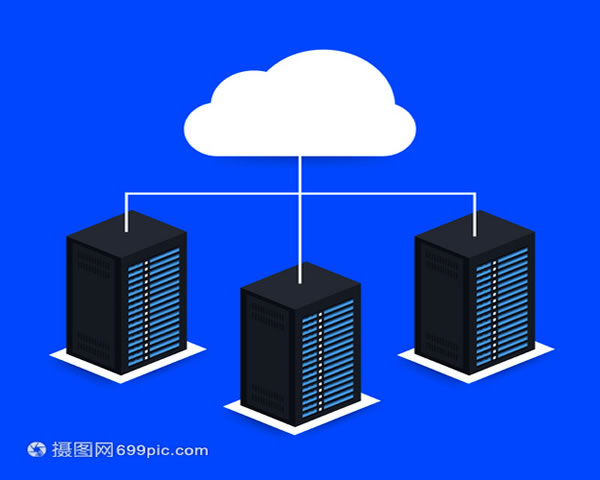
recommended architecture: user -> cdn edge (cached static/partly dynamic) -> global load balancing (gslb/anycast) -> japanese native ip computer room cluster -> local l4/l7 load balancing -> application server/database. this not only utilizes the edge cache, but also implements cross-computer room failover through gslb, and at the same time ensures high availability through local load balancing in the computer room.
about anycast and gslb
anycast is suitable for fast routing to the nearest edge point to improve global access latency; gslb 's dns-based traffic scheduling can allocate traffic according to health checks, geographical location or load. both can be used at the same time: anycast is used for cdn and edge nodes, and gslb is used for intelligent switching across multiple japanese computer rooms or regions (tokyo, osaka).
session persistence and stateless design
in order to facilitate load balancing and fault migration, the application should be designed as stateless as possible, and the session data should be placed in redis, memcached or an external database. if sticky sessions must be used, it is recommended to enable token or cookie-based stickiness in the load balancing layer and set a short expiration to facilitate fast failover.
ssl/tls and security hardening
it is recommended that ssl termination be done at a cdn or edge, with automated renewals managed using let's encrypt or commercial certificates. back-end encryption (two-way tls or intranet self-signing) should still be enabled inside the computer room, and combined with waf, ddos protection and rate limiting to deal with common attacks.
monitoring, alarming and log aggregation
establish a unified monitoring system, covering cdn hit rate, edge delay, load balancing health, server cpu/memory, network packet loss and application error rate. log centralization (elk/efk or cloud logging service) facilitates tracking of cross-layer issues. alarms should be classified and support automated responses (such as traffic rerouting, automatic expansion and contraction).
cost optimization tips
the cheapest way is not to simply pursue the lowest price, but to reduce the total tco through architectural optimization: rationally setting up cdn cache, using traffic cleaning and compression to reduce bandwidth, automatically shrinking instances during off-peak hours, using reserved or annual instances to reduce computing costs, and obtaining better bandwidth unit prices through multi-vendor negotiation.
compliance and data sovereignty
when deploying in japanese computer rooms, pay attention to local laws and data protection requirements, ensure that user data is stored in japan as needed, and database backup and log retention policies comply with the requirements of gdpr or japan's personal information protection act (appi). use local encryption and access auditing when necessary.
testing and rehearsals
conduct regular fault drills (such as computer room failover, cdn back-to-source degradation, load balancing fault recovery), and conduct stress testing and chaos engineering to verify the system's behavior under abnormal conditions. drill results are used to continuously improve sops and automation scripts.
summary and implementation suggestions list
taken together, the best practices are: give priority to localized japanese native ip computer rooms to ensure network quality; cooperate with multi-vendor cdn to improve edge coverage and caching efficiency; use flexible load balancing at key nodes to achieve high availability and failover. please complete network connectivity assessment, cost model calculation and compliance review before implementation, and continue monitoring and drills after deployment to ensure stable operations.

- Latest articles
- Best Practices For Data Synchronization And DNS Switching During The Migration Of Native Vietnamese IP VPS
- Key Compliance And Privacy Protection Considerations When Choosing Original IPs For Taiwan Services
- Strategies For Negotiating Discounts On Bulk Purchases Of Korean Original IPs, Along With Recommendations For Long-term Maintenance Agreements
- Bandwidth Optimization: How To Configure The Network Of Japanese Cloud Servers For Instant Response To Reduce Latency
- Potential Service Risks And Assessment Checklist Behind The Low Prices Of High-security Servers In The United States
- Comparison Of Latency Between Alibaba Cloud Hong Kong CN2 And Routes In Other Regions, Along With Selection Recommendations
- Practical Tips: Use FIFA With A Hong Kong VPS To Connect To The US And Achieve Low-latency Multiplayer Gameplay
- How To Set Up A Taiwan Proxy IP Server: Detailed Steps And Common Error Troubleshooting
- An Operator’s Perspective On Why Alibaba Cloud Japan Doesn’t Use CN2 And An Assessment Of Its Impact On Access Speed
- What’s Vultr’s Korean VPS Like? An Honest Review On Latency And Stability
- Popular tags
-

Participate In Japanese Website Group Server Communication To Improve Your Technical Level
participate in japanese station group server exchanges, improve your technical level, and understand the latest technical trends and practices. -
A Guide To Consider Network Quality And Bandwidth For Choosing A Suitable Computer Room Japanese Station Group Server Website
this article provides webmasters with comprehensive considerations and purchase suggestions regarding network quality, bandwidth, cdn, high-defense ddos, vps and domain names when choosing japanese computer rooms and server groups. -

Which Platforms Provide High-quality Japanese Native Ip Services
this article will introduce which platforms provide high-quality japanese native ip services and provide detailed server configuration data and real cases.